

Nunavut’s Infrastructure Moment: Housing, Hydro and Arctic Connections Gain Momentum
Major housing commitments, water and sewer upgrades, airport construction, broadband funding and Inuit-led energy and transportation projects have moved forward across Nunavut, although many remain years from completion.
Over the past year, major housing commitments, water and sewer upgrades, airport construction, broadband funding and Inuit-led energy and transportation projects have moved forward across Nunavut. Many remain years from completion, but together they could reshape daily life in the territory — and Canada’s presence in the Arctic.
For decades, infrastructure in Nunavut has often been discussed in terms of what is missing: enough housing, serviced lots, modern water systems, reliable power, roads between communities and transportation links comparable to those taken for granted elsewhere in Canada.
Over the past 12 months, that conversation has begun to change.
Nunavut is not suddenly overcoming its infrastructure deficit. Many of the territory’s largest proposed projects remain in environmental review, engineering or financing stages, and the challenges of building in the Arctic remain enormous. But there has been measurable progress: housing is being delivered, municipal infrastructure is receiving substantial new funding, airports are being rebuilt, renewable-energy projects are advancing and several long-discussed nation-building projects have moved closer to construction.
The Government of Nunavut itself is now planning about $1.6 billion in capital spending between 2026 and 2030, while its 2026-27 budget includes approximately $201 million for new community infrastructure and $87 million for public and staff housing, homeownership and repairs. The scale of the remaining need is still significant — the territorial government estimates that roughly 70 per cent of Nunavut’s health facilities require renovation or replacement to meet operational needs and modern standards.
Housing is increasingly being treated as an infrastructure problem
Perhaps the most immediate change is in housing.
In January, Canada, Nunavut and Nunavut Tunngavik Incorporated announced a partnership worth up to $480 million to deliver at least 750 additional homes across the territory. Under the finalized arrangement, the planned mix includes 425 public housing units, 150 affordable units, 150 supportive housing units and 25 units constructed through NTI.
Some of those homes are already moving from funding agreements to construction. Nearly 100 modular units had been shipped to Nunavut by July, with homes occupied in Cambridge Bay and additional units placed in Iqaluit and seven other communities. Another 120 units were planned for the 2026 sealift.
The significance goes beyond the number of houses.
Building housing in Nunavut requires land, roads, water, sewage capacity, power and construction labour. Without those underlying systems, housing targets can exist on paper without communities actually having the capacity to absorb new development.
Iqaluit offers one of the clearest examples of the shift in approach. In April, the federal government committed $108.7 million toward the city’s water and wastewater infrastructure. The work includes improvements to trucked water and sewage facilities and fleets, as well as expansion of Iqaluit’s utilidor network.
According to the federal government and the City of Iqaluit, those upgrades could create enough municipal capacity to support approximately 2,000 to 2,500 additional housing units by 2031.
That may ultimately prove as important to Iqaluit’s growth as any individual housing announcement. It addresses one of the physical limits on expanding Canada’s fastest-growing northern capital rather than simply funding buildings one project at a time.
Nunavut’s airports are being treated as national infrastructure
Transportation has also seen substantial movement.
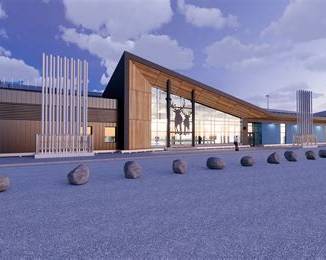
In Rankin Inlet, a new airport terminal began entering service this year after a major expansion project that increased capacity dramatically. The terminal project is valued at roughly $85 million, including $63.5 million in federal support. Work has now moved into another construction phase, with the old terminal being demolished and additional passenger facilities expected to be completed by 2028.
A separate modernization of Rankin Inlet’s aging runway is also moving ahead. Ottawa has identified the airport as both a critical Kivalliq transportation hub and strategically important Arctic infrastructure. Federal plans call for runway improvements capable of supporting larger civilian and military aircraft, while National Defence provided additional funding this spring for design work.
That dual use is increasingly important.
In southern Canada, an airport may primarily be transportation infrastructure. In Nunavut, airports are also medical evacuation routes, cargo terminals, food-supply links, emergency infrastructure and, increasingly, part of Canada’s Arctic defence network.
The federal government has also announced new Northern Operational Support facilities at Resolute Bay, Cambridge Bay and Rankin Inlet, while Iqaluit is included in a much larger modernization program for Canada’s northern military operating locations.
The result is an opportunity for defence spending to leave behind infrastructure that has practical civilian value rather than creating isolated military installations alongside communities with unmet infrastructure needs.
Hydroelectricity could fundamentally change Iqaluit
One of the most consequential proposals is the Iqaluit Nukkiksautiit Hydro Project.
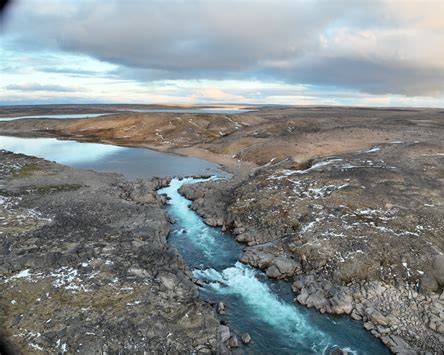
The Inuit-owned project proposes a 15-to-30-megawatt hydroelectric facility on the Kuugaluk River, approximately 60 kilometres northeast of Iqaluit. It was referred to the federal Major Projects Office in November 2025 and has since entered the Nunavut regulatory process.
Iqaluit currently generates its electricity almost entirely from imported diesel. The proposed project could displace an estimated 15 million litres of diesel every year, while providing substantially more generating capacity for a city expected to continue growing.
Its importance is difficult to overstate.
Reliable locally generated power could reduce Iqaluit’s exposure to fuel prices and annual resupply logistics while making future housing, commercial development and government infrastructure easier to support. It could also eventually supply expanding federal and defence infrastructure in the capital.
The project has been estimated at roughly $500 million, however, and construction is not yet approved. The Nunavut Impact Review Board currently lists it in active screening, and leaders in Pangnirtung have raised concerns about potential effects of the project that will need to be addressed through the regulatory and consultation process.
That distinction is important: federal interest has significantly improved the project’s prospects, but referral to a major-projects process is not the same thing as having a completed environmental review, financing package and construction contract.
Smaller energy projects could begin changing diesel dependence sooner
Nunavut is also pursuing renewable power on a smaller scale.
In June, Ottawa announced $17.2 million for four clean-energy initiatives in the territory. Among them is planning for solar, wind and battery systems in Sanirajak, Kinngait and Qausuittuq, designed with the goal of eventually offsetting more than half of diesel consumption in those communities.
Funding is also supporting Qulliq Energy Corporation’s renewable-energy work across Nunavut’s 25 diesel-dependent communities and a Sakku Investments solar-and-battery demonstration capable of operating either with the community grid or independently.
These projects receive less attention than a major hydroelectric development, but they may be equally important in determining what Nunavut’s future electrical system looks like. A territory of 25 isolated electrical grids is unlikely to have a single energy solution.
The Kivalliq could eventually connect to the continental grid
A much larger transformation remains under development in the Kivalliq.
The proposed Kivalliq Hydro-Fibre Link would run approximately 1,200 kilometres from Manitoba into Nunavut, carrying both hydroelectric power and fibre-optic communications to Rankin Inlet, Arviat, Baker Lake, Chesterfield Inlet and Whale Cove.
Over the past year, Manitoba committed 50 megawatts of firm power to the project, Nunavut and Manitoba signed a broader memorandum of understanding supporting northern infrastructure development, and Ottawa provided another $3 million for environmental studies, Inuit Qaujimajatuqangit research and regulatory preparation.
The proposal remains a development-stage project and will require major capital financing before construction begins. But if completed, it would create something Nunavut has never had: a physical electricity connection to the North American grid, accompanied by terrestrial fibre infrastructure.
That could alter the economics of housing, mining, commercial development and public services across much of the Kivalliq.
Grays Bay could create Nunavut’s first road connection to Canada
In the Kitikmeot, the Grays Bay Road and Port Project has also gained considerable momentum.
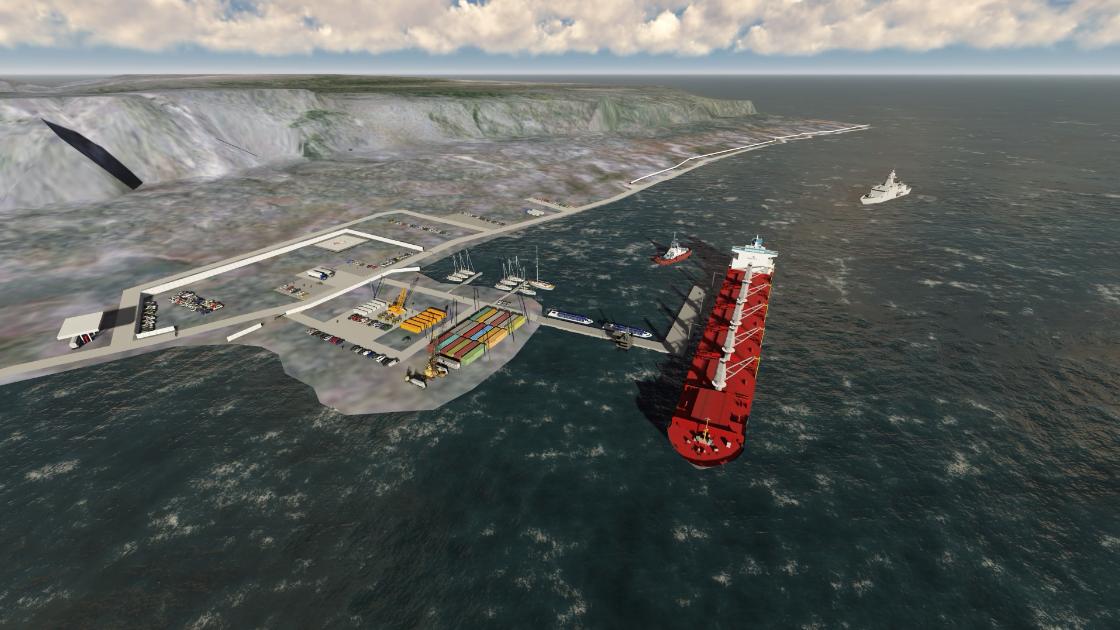
The proposal includes a deepwater port on the Coronation Gulf and approximately 230 kilometres of all-season road south toward the Nunavut-Northwest Territories boundary. Its environmental impact statement was filed in March, the federal government referred it to the Major Projects Office and Ottawa subsequently conditionally approved up to $50 million for planning and preconstruction work.
The longer-term vision is even larger.
If Grays Bay is eventually connected to a corresponding road through the Northwest Territories’ Slave Geological Province, it could create the first permanent road connection between Nunavut and the North American highway system.
For Kitikmeot communities, that could open new employment, contracting and transportation opportunities. For Canada, the corridor could improve access to critical mineral deposits while providing new logistical infrastructure on the western approaches to the Northwest Passage.
It is precisely the type of project where local economic development and national strategic interests increasingly overlap.
Qikiqtarjuaq shows why optimism still needs caution
Not every project is moving forward on schedule.
The proposed Qikiqtarjuaq Deep Sea Port has made important progress, including a move toward Inuit-led development in September 2025 and Nunavut Impact Review Board approval later that year. The project could support fishing, sealift operations, tourism, marine safety and government vessels near the eastern entrance to the Northwest Passage.
But its estimated cost has risen to approximately $350 million, and construction that had been expected to begin this summer has been pushed to 2027 while additional financing is sought.
That delay is a useful reminder of the difference between identifying a strategic project and actually building one in Nunavut. Materials must travel extraordinary distances, construction seasons are short, specialized workers are limited and escalating construction costs can transform the economics of a project before work begins.
Digital infrastructure is becoming essential infrastructure
Some of the most consequential infrastructure arriving in Nunavut may barely be visible.
In April, the federal government announced more than $86 million for Northwestel to extend unlimited high-speed internet service to approximately 11,650 Nunavut households in all 25 communities.
The project will use a combination of fibre and low-Earth-orbit satellite technology and is expected to be completed by March 2029.
For remote communities, better internet affects far more than entertainment. It can expand telehealth, distance education, government services, banking, business development and access to southern professional services — while making it more practical for Nunavut businesses to compete nationally.
Why this matters to the rest of Canada
There is a broader change running through almost all of these projects.
For years, Arctic sovereignty was often discussed primarily in terms of military presence, patrols and assertions of jurisdiction. Increasingly, the federal government is acknowledging a more practical reality: a strong Canadian Arctic requires strong Arctic communities.
A military aircraft still requires a functional runway. A northern base needs electricity, water, communications and housing. Coast Guard and commercial vessels need ports. Resource projects need transportation corridors. Governments need communities capable of attracting and retaining the people who operate all of those systems.
At the same time, many of Nunavut’s most significant proposed projects are Inuit-led or Inuit-owned, including the Iqaluit hydro project, the Kivalliq Hydro-Fibre Link and much of the work surrounding Grays Bay and Qikiqtarjuaq. That creates the potential for infrastructure investment to build local ownership, skills and businesses instead of simply importing construction activity from the south.
The next several years will determine how much of today’s momentum turns into physical infrastructure.
There are legitimate environmental questions to resolve, enormous financing requirements and no guarantee every proposal will proceed. Nunavut also remains far behind most of Canada in basic community infrastructure, and headline megaprojects cannot substitute for water plants, sewage systems, housing, health centres and reliable local utilities.
But something significant has changed over the past year.
Rather than treating Nunavut’s housing shortage, diesel dependence, transportation isolation, communications gaps and Canada’s Arctic security concerns as separate problems, governments and Inuit organizations are increasingly treating them as parts of the same infrastructure challenge.
If even a substantial share of the projects now moving through construction, financing and regulatory review are completed, the next decade could leave Nunavut considerably better connected, better housed and more economically independent than it is today.
And for Canada, that would represent something more durable than a temporary increase in Arctic attention: communities with the infrastructure required to live, grow and prosper permanently in the North.
Comments
0 approved comments. Every comment is reviewed before appearing.
Comments appear here after identity verification and News Desk review.